Solitaire Tripeaks: Card Games
- 4.8
- Rating
- 1.00M
- Installs
- Free
- Price

 Analysis by App-foxy
Solitaire Tripeaks: Card Games is the kind of mobile game I open when I want a quiet few minutes rather than a demanding challenge. Its central appeal is simple: it turns the familiar solitaire format into a TriPeaks layout, where I clear cards by building on a visible sequence and deciding which move keeps the board alive. That small change gives each hand a pleasant rhythm. I am not just sorting a deck mechanically; I am choosing whether to take the obvious move now or preserve a better route for later.
That focus makes the game easy to understand, but it also gives it a distinct personality among card games. It is less about long sessions of deep planning than about short decisions, gentle momentum, and the satisfaction of uncovering another layer of the layout. I found it particularly comfortable on a phone because the board does not ask me to manage a complicated collection of menus or rules. I can start playing quickly, pause mentally between moves, and return when I have another spare moment.
A simple TriPeaks idea with more decision-making than it first appears
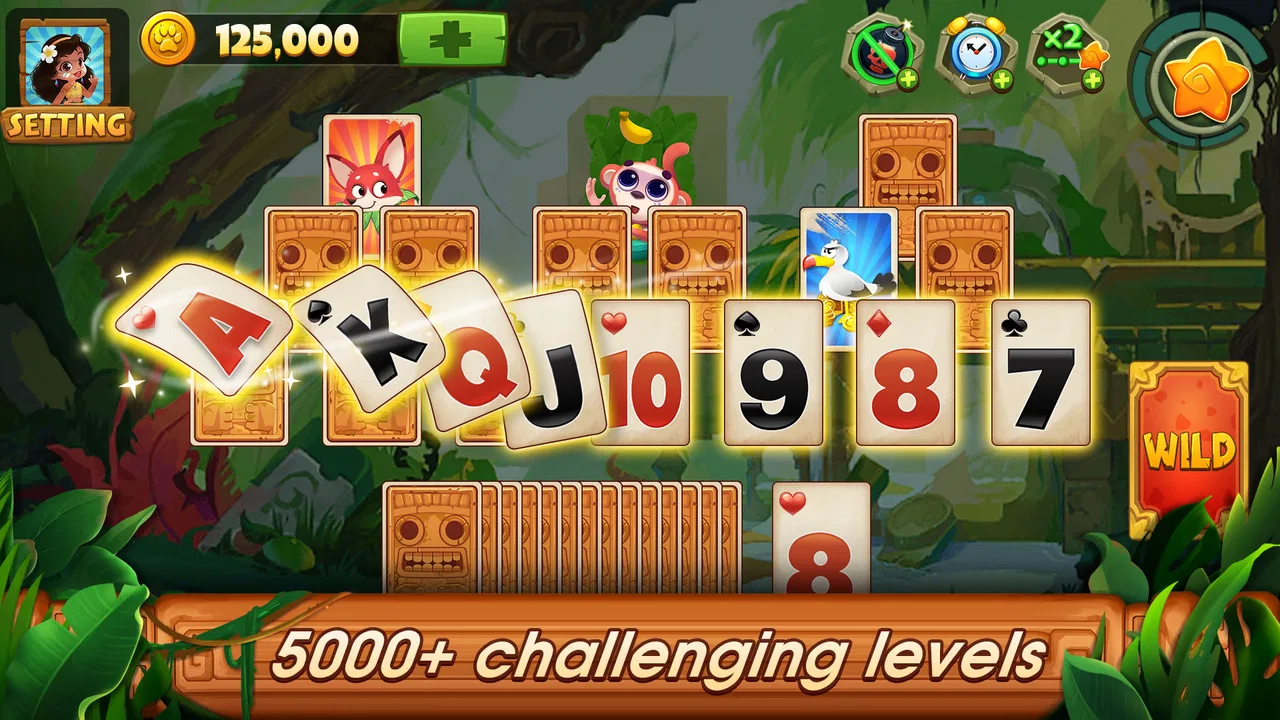
The defining capability here is the TriPeaks version of solitaire itself. Cards are arranged in three peaks, with some cards initially covered by others. I use a stock and a current card to remove exposed cards that sit immediately above or below it in rank. A run can build naturally: if I play a card one rank higher, I may then be able to remove a card one rank lower without drawing again. That chain is where the game becomes more interesting than ordinary tap-and-clear play.
You May Also Like

 Blood Strike: 2.5 Anniversary
Blood Strike’s Loadouts Turn Every Drop Into a Tactical Gamble
A close look at Blood Strike’s custom loadouts: how fast access to signature weapons reshapes its battle royale rhythm, rewards preparation, and narrows the gap between fights.

 Pandora - Music & Podcasts
Pandora’s Music Is Easy to Start, but Harder to Recover
Pandora’s strength is its low-effort path from a seed to a station. Its weak spot is how much confidence it asks you to place in connection, setup, and quiet recovery.

 8 Ball Pool
 Is Built on Rivalries, Rematches, and Routine
A close look at the rivalries, rematches, shared routines, and unanswered safety questions that turn a quick pool match into a persistent mobile community.

 Samsung Music
’s Quiet Strength Is Playing What You Already Own
Its reach comes less from spectacle than from dependable access to a personal library. That simplicity is both the app’s strongest retention engine and its ceiling.

 AccuWeather: Weather Radar
AccuWeather Review: A Quick, Clear Forecast for Everyday Decisions
For everyday plans, the best forecast is the one you can understand quickly. AccuWeather makes rain timing, radar, and local conditions easy to act on, with a few trade-offs.

 Hill Climb Racing
Why Hill Climb Racing Still Turns Crashes Into One More Run
A tiny car, a bumpy hill and one more upgrade: Hill Climb Racing keeps resurfacing because its simple chaos makes every near-miss feel personal.
More From Our News Desk



In practice, the important skill is not speed. It is reading the exposed cards before committing to the first available option. If two cards can be played, I look at which one reveals more of the layout or leaves a useful continuation. Removing the wrong card can break a promising run and force me back to the stock sooner than necessary. The rules remain approachable, yet the board quietly rewards players who pause for a second and inspect the consequences.
This is why I think the game works well as a relaxing pastime. The decisions are meaningful without feeling exhausting. I can play casually, but I still have a reason to improve: better choices create longer sequences and make the board feel more manageable. The strongest part of the experience is the balance between low pressure and small strategic choices.
The developer, Card Games, Inc, has positioned this as a free game for a broad audience. It belongs to the card category, carries an Everyone age rating, and supports devices running Android 6.0 or later. The current version is 3.2.6. Those details matter most to someone using an older phone or choosing a game for a shared family device, because the entry barrier is fairly low.
What a typical hand feels like
I usually begin by scanning the cards that are already available rather than tapping immediately. Suppose the current card allows two possible plays. One option may uncover a card beneath a peak, while the other may extend a sequence and expose several cards afterward. The better move is not always the one that produces the longest immediate chain. Sometimes revealing the hidden card is more valuable because it gives me another route when the current run ends.
That habit is one of the more useful ways to approach TriPeaks: treat every exposed card as part of a small map. The peaks are not just decoration. Their arrangement affects how quickly a choice opens or closes the board. I pay special attention to cards supporting more than one face-down card, since clearing them can change the next few decisions. This is a concrete difference from playing on autopilot, and it makes repeated hands feel less interchangeable.
The stock becomes a pacing tool rather than merely a source of random cards. When I have several playable cards, I try to use the board first and delay drawing whenever possible. That preserves flexibility. If I draw too early, I may waste a card that would have supported a longer chain later. On the other hand, waiting too long can leave the board with no legal move. The useful middle ground is to keep checking whether a move creates access to another card before reaching for the stock.
For a new player, the learning curve is gentle. The basic rank relationship is easy to grasp, and the TriPeaks layout gives clear visual goals. I would not expect someone unfamiliar with solitaire to need a long tutorial before understanding the central loop. More experienced players can immediately focus on sequencing, risk, and conserving opportunities. That makes it suitable for mixed households where one person wants something effortless and another enjoys optimizing each hand.
A realistic everyday use for short breaks
My favorite use case is a short waiting period: sitting with a coffee, waiting for an appointment, or taking a break between tasks. I can play a few moves without needing sound, a large uninterrupted screen, or a commitment to remember a complicated story. The game fits the mental shape of a small break because its attention demand rises and falls with the board. If I need to stop, the natural pause between decisions makes it easier to put the phone down than with a fast action game.
It also works for winding down in the evening, provided I am looking for light engagement rather than a completely passive activity. The familiar card format gives my mind something to follow, while the lack of complicated controls keeps the experience calm. I would choose it over a competitive multiplayer card game when I do not want opponents, chat, timers, or pressure to respond immediately.
There is another practical benefit to this format: the game can be enjoyed in very small portions. I do not need to reserve a long session to feel that I have made progress within a hand. That makes it a better fit for people who check their phone repeatedly throughout the day than for someone searching for a single, expansive gaming experience. The trade-off is that the same simplicity may feel repetitive if I want a constantly changing world, narrative, or collection system.
Small habits that improve the experience
My first tip is to avoid treating every legal move as equally good. Before tapping, I look for the card that unlocks the most useful part of the layout. A card that reveals another face-down card is often worth more than one that merely keeps a short chain going, especially when the newly exposed card may connect with the current sequence.
My second tip is to protect flexibility. If I can choose between two cards of the same useful rank, I consider which one leaves more ranks accessible afterward. This is particularly helpful near the peaks, where one removal can expose a route while another may leave a dead end. It is a small adjustment, but it turns the game from reflexive tapping into deliberate planning.
My third tip is to use the stock only after checking the entire visible board. I have lost promising hands by drawing while a playable card was still available elsewhere. A quick scan from one peak to the next prevents that mistake. I also try to remember which exposed cards remain available after a chain ends, since that helps me judge whether extending the current run is worth the risk.
These habits do not transform the game into a difficult strategy title, and that is not their purpose. They simply make the core capability more satisfying. The game remains approachable, but I get more control over the outcome and less of the feeling that I am tapping randomly until the hand stops.
Where it differs from familiar solitaire alternatives
Compared with classic Klondike solitaire, TriPeaks feels more immediate. Klondike often asks me to manage several tableau columns and think about building complete descending sequences by suit. TriPeaks instead emphasizes clearing a compact arrangement through rank connections. I spend less time organizing piles and more time deciding which exposed card opens the next section of the board.
Compared with Spider Solitaire, this game is much lighter. Spider rewards long-term construction across multiple suits and can become a demanding puzzle. I would choose Spider when I want a slower, more analytical challenge. I choose this TriPeaks game when I want decisions that are clear within seconds and a board that gives me frequent signs of progress.
It also differs from competitive card apps because the pleasure comes from personal rhythm rather than outplaying another person. There is no need to wait for an opponent or learn a multiplayer etiquette. That is a strength for quiet solo play, but a weakness for anyone who needs social interaction or constantly changing human competition. If your ideal card game involves bluffing, ranking ladders, or live matches, this will probably feel too self-contained.
The game’s free price makes it easy to try, although optional in-app purchases range from $0.99 to $99.99 per item. I would approach those purchases carefully and decide whether they genuinely improve my enjoyment rather than buying impulsively after a frustrating hand. The free entry point is appealing, but players who are sensitive to spending prompts should pay attention to the purchase flow and keep their expectations realistic.
Limitations that affect long-term appeal
The same focused design that makes the game relaxing can limit its variety. If I want a card game with a large rule set, extensive customization, or a strong long-term campaign, this is not the obvious choice. TriPeaks offers a clear central loop, but that loop needs to remain enjoyable on its own. Players who tire quickly of repeating similar board decisions may find the experience loses freshness sooner than a broader card collection game.
Luck is another part of the trade-off. Careful play improves my chances, but the cards I receive still influence the hand. That can be satisfying when a difficult board opens through a well-timed sequence, yet frustrating when the available options dry up despite sensible decisions. I would not use this game as a test of pure skill. It is better understood as a blend of planning and chance, with enough control to make good choices matter but not enough to guarantee a win.
The free-to-play structure may also shape how comfortable the game feels over time. The listed purchase range is wide, so I would recommend treating optional spending as a firm personal limit from the start. Someone who simply wants a free diversion can enjoy the basic concept, while a player who feels compelled to buy help after every unlucky hand may have a less pleasant experience.
There is also a difference between relaxing and mindless. I can play this while mildly distracted, but the best moments come when I give the board a little attention. If I am too tired to track which cards I have preserved, the strategic side disappears and the game becomes a sequence of taps. That is not a flaw in the rules, but it is worth knowing: the app suits gentle focus more than complete background play.
Who will get the most from it
I would recommend this game to someone who already enjoys solitaire but wants a quicker, more visually compact format. It is also a good starting point for a person who has never played a digital card game and wants rules that can be learned without a long commitment. The Everyone rating and modest minimum operating-system requirement make it a practical option for a wide range of players, including families sharing older devices.
It is especially well suited to short sessions. If you often have five minutes to fill and prefer a calm puzzle over a scrolling feed, the TriPeaks structure gives that time a clear shape. I also think it suits players who enjoy improving through small habits: scanning before drawing, choosing cards that uncover more of the board, and preserving a useful sequence instead of chasing the first available move.
I would suggest looking elsewhere if your priority is competitive play, deep deck construction, or a substantial narrative. Classic Klondike may be better for traditional solitaire purists, Spider for heavier planning, and multiplayer card games for social tension. This title does not need to replace those alternatives. Its value is that it offers a focused solo experience with enough decision-making to stay engaging without becoming demanding.
The game has attracted a 4.8 average from around 125 thousand ratings and has passed one million installs, which matches my impression that its straightforward format has broad appeal. Those figures do not change the central question, though: do you enjoy clearing a TriPeaks board through short rank-based chains? If yes, the game gives that idea a comfortable mobile home. If no, a strong reception will not make the repeated layout feel more varied.
My recommendation after spending time with it
Solitaire Tripeaks: Card Games succeeds because it keeps one capability at the center and lets that capability carry the experience. The game is not trying to be a sprawling card platform. It is a focused way to play TriPeaks solitaire, with decisions that are simple to learn but rewarding to refine. I like that I can approach it casually while still noticing a difference when I plan ahead.
My recommendation is strongest for people who want a free, solo card game for quiet breaks and do not mind a little luck or repetition. I would be more cautious if you dislike optional purchase systems, need a deep variety of modes, or want every result to depend entirely on skill. For the right player, though, the compact board and chain-building rhythm make it easy to return to.
In the end, I see it as a dependable pocket pastime rather than a game I would play for dramatic progression. Its best moments come from recognizing a useful route, clearing several cards in succession, and watching a crowded layout open because of one careful choice. If you want relaxing solitaire with just enough strategy to keep your attention, this is a sensible one to try.
FAQs for Solitaire Tripeaks: Card Games
01What is Solitaire TriPeaks: Card Games?
Solitaire TriPeaks: Card Games is a casual solitaire game based on the classic TriPeaks layout. You clear cards from the tableau by selecting cards that are one rank higher or lower than the card in the waste pile. The game usually combines traditional card-solving with level progression, daily challenges, coins, boosters, and themed events, making it suitable for short sessions or longer relaxed play.
02How do you play Solitaire TriPeaks: Card Games?
At the beginning of a round, several face-down and face-up cards are arranged in three pyramid-like peaks. Your goal is to remove all cards from the tableau by matching a card that is immediately above or below the current waste-card rank. Aces may connect with kings depending on the game rules. You can reveal hidden cards, build streaks, and use the stock pile when no useful move is available.
03Can Solitaire TriPeaks: Card Games be played offline?
Many basic solitaire rounds can often be played without a constant internet connection, which is convenient when traveling or using limited mobile data. However, online access may be required for advertisements, cloud synchronization, leaderboards, special events, daily rewards, purchases, or account-related features. Availability can vary by version and device, so it is best to check the game’s store description and test offline access after installation.
04Is Solitaire TriPeaks: Card Games free to download and play?
The game is generally available as a free download, allowing players to start with a selection of levels and features without paying upfront. Nevertheless, free gameplay may include advertisements, optional in-app purchases, virtual coins, extra lives, boosters, or other convenience items. You can usually progress without spending money, but completing difficult levels or accessing certain benefits may be faster if you choose to make purchases.
05Is Solitaire TriPeaks: Card Games suitable for beginners and children?
Solitaire TriPeaks: Card Games is easy for beginners to understand because its main rule is simply matching cards one rank higher or lower than the active card. Early levels normally introduce the mechanics gradually, while later stages add more obstacles and strategic decisions. The game is generally family-friendly, although parents should review advertising, in-app purchase settings, and the age rating before allowing children to play.
Pros
- Relaxing gameplay suitable for short or extended sessions.
- Large number of levels provides plenty of content to explore.
- Simple controls make it easy for beginners to pick up.
- Daily challenges add variety beyond the standard levels.
- Offline play is convenient when no internet connection is available.
Cons
- Frequent ads may interrupt the flow between rounds.
- Some boosters and extra moves can encourage in-app purchases.
- Difficulty can increase sharply on certain later levels.
- Progress may feel repetitive after extended play sessions.
- Battery usage can be noticeable during longer gaming sessions.

Solitaire Tripeaks: Card Games
Gallery